舆图

资料
百科(英文)
这个词条没有中文维基百科条目,下面是英文维基百科的原文。
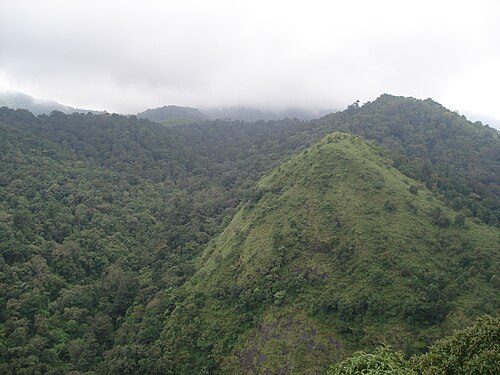
Silent Valley National Park is a national park in Kerala, India. It is located in the Nilgiri hills and has a core area of 89.52 km2 (34.56 sq mi). It is surrounded by a buffer zone of 148 km2 (57 sq mi). This national park has some rare species of flora and fauna. Silent Valley National Park was explored in 1847 by the botanist Robert Wight. It is located in the border of Mannarkkad Taluk of Palakkad district, Nilambur Taluk of Malappuram district, Kerala, and Nilgiris district of Tamil Nadu.
It is located in the rich biodiversity of Nilgiri Biosphere Reserve. The Karimpuzha Wildlife Sanctuary, New Amarambalam Reserved Forest, Nedumkayam Rainforest in Nilambur Taluk of Malappuram district, Attappadi Reserved Forest in Mannarkkad Taluk of Palakkad district, and Mukurthi National Park of Nilgiris district are located around Silent Valley National Park. Mukurthi peak, the fifth-highest peak in South India, and Anginda peak are also located in its vicinity. The Bhavani River, a tributary of the Kaveri River, and Kunthipuzha River, a tributary of Bharathappuzha river, originate in the vicinity of Silent Valley. The Kadalundi River also originates in Silent Valley National Park.
The national park is one of the last undisturbed tracts of South Western Ghats mountain rain forests and tropical moist evergreen forest in India. Contiguous with the proposed Karimpuzha National Park (225 km2 (87 sq mi)) to the north and Mukurthi National Park (78.46 km2) to the north-east, it is the core of the Nilgiri Biosphere Reserve (1,455.4 km2), and is part of the Nilgiri Sub-Cluster (6,000+ km2), Western Ghats World Heritage Site, recognised by UNESCO in 2007.
Plans for a hydroelectric project that threatened the park's biodiversity stimulated an environmentalist social movement in the 1970s, known as the Save Silent Valley movement, which resulted in cancelling the project and creating the park in 1980. The visitors' centre for the park is at Sairandhri.
History
The first Western investigation of the watersheds of the Silent Valley area was in 1857 by the botanist Robert Wight. The British named the area Silent Valley because of a perceived absence of noisy cicadas. Another story attributes the name to the anglicisation of Sairandhri. A third story refers to the presence of many lion-tailed macaques Macaca silenus.
In 1914, the forest of the Silent Valley area was declared a reserve forest. Between 1927 and 1976, portions of the Silent Valley forest area were subjected to forestry operations. In 1928, the location on the Kunthipuzha River at Sairandhri was identified as an ideal site for electricity generation, and in 1958 a study and survey of the area was conducted and a hydroelectric project of 120 MV costing Rs. 17 crore was proposed by the Kerala State Electricity Board.
Environmental concerns
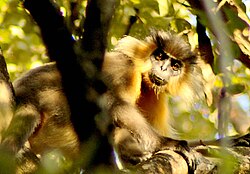
Silent Valley is home to the largest population of lion-tailed macaques, an endangered species of primate. Public concern over threats to their habitat led to the establishment of Silent Valley National Park.
In 1973, the valley became the focus of "Save Silent Valley", India's fiercest environmental movement of the decade, when the Kerala State Electricity Board decided to implement the Silent Valley Hydro-Electric Project (SVHEP), centered on a dam across the Kunthipuzha River. The resulting reservoir would flood 8.3 km2 of virgin rainforest and threaten the lion-tailed macaque. In 1976, the Kerala State Electricity Board announced plans to begin dam construction and the issue was brought, to public attention. Romulus Whitaker, founder of the Madras Snake Park and the Madras Crocodile Bank, was probably the first person to draw public attention to the small and remote area.
On 7 September 1985 the Silent Valley National Park was formally inaugurated and a memorial at Sairandhri to Indira Gandhi was unveiled by Rajiv Gandhi, her son and the next prime minister.
Geography
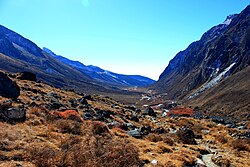
Silent Valley is rectangular, twelve kilometres from north to south and seven from east to west. Located between 11°03' to 11°13' N (latitude) and 76°21' to 76°35' E (longitude) it is separated from the eastern and northern high altitude plateaus of the (Nilgiris Mountains) by high continuous ridges including Sispara Peak (2,206 m) at the north end of the park. The park gradually slopes southward down to the Palakkad plains and to the west it is bounded by irregular ridges. The altitude varies from 658 m to 2328 m at Anginda Peak, but most of the park lies within the altitude range of 880 m to 1200 m. Soils are blackish and slightly acidic in evergreen forests where there is good accumulation of organic matter. The underlying rock in the area is granite with schists and gneiss, which give rise to the loamy laterite soils on slopes.
Rivers
The Kunthipuzha River drains the entire 15 km length of the park from north to south into the Bharathapuzha River. Kunthipuzha River divides the park into a narrow eastern sector of width 2 kilometers and a wide western sector of 5 kilometers.
Indigenous people
There is no record of the valley ever having been settled, but the Mudugar and Irula tribal people are indigenous to the area and do live in the adjacent valley of Attappady Reserved Forest. Also, the Kurumbar people live in the highest range outside the park bordering on the Nilgiris.
Many of the Mudugar, Irula and Kurumbar now work as day labourers and porters. 16 out of 21 tribal colonies in the Attappady range cultivate marijuana. Many Mudugar are in abject poverty and easily recruited by the so-called ganja mafia. In 2006, it was planned to employ 50 additional men from the 21 tribal settlements as forest guards.
Flora and fauna
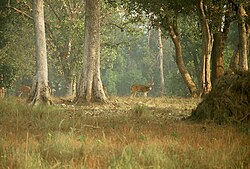
The valley areas of the park are in a Tropical and subtropical moist broadleaf forests Ecoregion. Hilly areas above 1,000 m are in the South Western Ghats montane rain forests region. Above 1,500 m, the evergreen forests begin to give way to stunted forests, called sholas, interspersed with open grassland, both of which are of interest to ecologists as the rich biodiversity here has never been disturbed by human settlements. Several threatened species are endemic here. New plant and animal species are often discovered here.
Fauna
Birds
Birdlife International lists 16 bird species in Silent Valley as threatened or restricted:- Nilgiri wood-pigeon, Malabar parakeet, Malabar grey hornbill, white-bellied treepie, grey-headed bulbul, broad-tailed grassbird, rufous babbler, Wynaad laughingthrush, Nilgiri laughing thrush, Nilgiri blue robin, black-and-rufous flycatcher, Nilgiri flycatcher, white-bellied blue-flycatcher, crimson-backed sunbird and Nilgiri pipit.
Rare bird species found here include the Ceylon frogmouth and great Indian hornbill.
Insects
There are at least 730 identified species of insects in the park.
Genetic resources
Throughout human history about 10% of the genetic stock found in the wild has been bred into palatable and higher yielding cereals, fruits and vegetables. Future food security depends on the preservation of the remaining 90% of the stock through protection of high biodiversity habitats like Silent valley.
The National Bureau of Plant Genetic Resources of ICAR (India), Plant Exploration and Collection Division has identified Silent Valley as high in bio-diversity and an important gene pool resource for recombinant DNA innovations. An important example of use of wild germplasm is gene selection from the wild varieties of rice Oryza nivara (central India) and Oryza Pittambi found in Silent Valley for the traits of broad spectrum disease resistance in high yielding hybrid rice varieties including IR-36, which are responsible for much of the Green Revolution throughout Asia.
Challenges
Forest fire
Fire is one of the major threats facing forests in Kerala. People engaged in grazing livestock often burn an area to get fresh grass shoots for their cattle, especially during dry season when fire danger is greatest. Also, illicit activities like ganja cultivation, poaching, tree felling, non timber forest products (NTFP) collection and very often careless tourists and pilgrims are responsible for big forest fires.
Cannabis cultivation
Silent Valley is home to some of India's largest illegal plantations of cannabis. Cannabis is one of the traditional plantations in these forests and there are people who depend on 'Ganja economy' for a livelihood. Tribes like Irula, Muduga and Kurumba (particularly the last one) have always grown cannabis in their history. The seedless variety of cannabis cultivated in Silent Valley is known as Sairandhri and is renowned internationally for its quality.
According to former additional chief secretary Madhava Menon, the cannabis cultivated here is one of the best in the world and is sold worldwide.
以上摘自英文维基百科「Silent Valley National Park」(有删节;去掉了表格、图片、参考文献和外部链接),按 CC BY-SA 4.0 使用。全文和最新版本请看原文。