舆图
Sultan Kudarat 城镇
棉兰老穆斯林自治区
- 国家 / 地区
- 菲律宾
- 一级行政区
- 棉兰老穆斯林自治区
- 坐标
- 北纬 7.23°,东经 124.26°

示意图,边界据 Natural Earth,不作为划界依据。
更多资料
- 人口(Wikidata)
- 124,965(2024 年)
- 面积
- 712.9 平方千米
- 海拔(Wikidata)
- 34 米
- 所属行政区
- 北马京达瑙省
- 邮政编码
- 9605
- 电话区号
- 64
- 邻接
- 哥打巴托市、Kabuntalan、Sultan Mastura
人口变化
| 年份 | 人口 | 较上一次 | |
|---|---|---|---|
| 1918 | 6,603 | ||
| 1939 | 15,823 | +139.6% | |
| 1948 | 15,127 | -4.4% | |
| 1960 | 30,614 | +102.4% | |
| 1970 | 40,377 | +31.9% | |
| 1975 | 47,101 | +16.7% | |
| 1980 | 48,383 | +2.7% | |
| 1990 | 72,331 | +49.5% | |
| 1995 | 76,125 | +5.2% | |
| 2000 | 94,861 | +24.6% | |
| 2007 | 121,324 | +27.9% | |
| 2010 | 82,758 | -31.8% | |
| 2015 | 95,201 | +15.0% | |
| 2020 | 105,121 | +10.4% | |
| 2024 | 124,965 | +18.9% |
Wikidata 记录的历次人口数(普查和估计混在一起,口径可能不同)。
百科(英文)
这个词条没有中文维基百科条目,下面是英文维基百科的原文。
Sultan Kudarat, officially the Municipality of Sultan Kudarat (Maguindanaon: Inged nu Sultan Kudarat; Iranun: Inged a Sultan Kudarat; Tagalog: Bayan ng Sultan Kudarat), is a municipality of the province of Maguindanao del Norte, Philippines. According to the 2024 census, it had a population of 124,965.
Formerly known as Nuling, it became the de jure capital of the former Maguindanao province in 1977. It served as the legislative capital of Maguindanao in 2011 as it plays host to the Maguindanao Provincial Board, previously housed in the former capitol at Shariff Aguak. This restored its previous status as provincial capital, which was shared with Buluan which served as the executive capital. In 2022, Republic Act 11550 officially designated Datu Odin Sinsuat as the official capital of Maguindanao del Norte and Buluan as official capital of Maguindanao del Sur. Once a provincial capitol is erected in Datu Odin Sinsuat, the legislature will move to that municipality.
History
The original seat of the Sultanate of Maguindanao was located at the mouth of the Maguindanao river (now Matampay) but later transferred to the nearby sitio at the bank of the Nuling Creek of Barangay Salimbao of this Municipality.
Sultan Mastura Kudarat, a royal lineage of the hero soldier Sultan Dipatuan Kudaratullah was appointed by American Governor Carpenter as President of the Municipal District of Nuling. The former declined and instead designated his son, Datu Mamadra Mastura for the position, who served from 1922 to 1923.
Nuling was a municipal district already prior to its reorganization as one of the twenty-eight, in the then-undivided Cotabato province, through Executive Order No. 9 issued by Department of Mindanao and Sulu acting governor Ponciano Reyes on March 8, 1917. It had six barrios then.
By virtue of Executive Order (EO) No. 82, issued by President Manuel Roxas on August 18, 1947, which organized the remaining municipal districts of the province into ten new municipalities, Nuling, Gubpañgan, and Balut, became part of the town bearing the name of the former, which would be its seat of government.
The boundary line with Parang was fixed twice through executive orders by President Elpidio Quirino, in 1949 and in 1953.
During the presidency of Carlos P. Garcia, the seat of municipal government was moved to Barrio Dalumangcob in 1957 through EO No. 267. Republic Act (RA) No. 3357, which became effective a year after its issuance in 1961, provided the conversion of ten sitios into barrios.
The municipality was renamed Sultan Kudarat through RA No. 5647, issued on June 21, 1969, in honor of Sultan of Maguindanao, Mohammad Dipatuan Kudarat.
In a plebiscite conducted on March 15, 2003, the electorate of the Municipality unanimously voted in favor of the creation of a new Municipality in the name of Sultan Mastura, being a son of Sultan Kudarat. The new Municipality of Sultan Mastura absorbed 13 barangays from the former leaving 39 for its mother town.
The town was part of the province of Shariff Kabunsuan from October 2006 until its nullification by the Supreme Court in July 2008.
On January 23, 2021, a joint police-military operation occurred, with twelve members of the Talusan group including a former village chief, as well as a Special Action Force member, killed in a shootout. The armed group was the "most wanted" in the municipality.
A plebiscite was scheduled to be held on September 7, 2024 to approve the creation of the municipality of Nuling from parts of Sultan Kudarat. However, the vote was shelved after the Supreme Court ruled on August 20 that provisions of the enabling act passed by the Bangsamoro government for the plebiscite were unconstitutional, particularly allowing only voters from barangays of the would-be municipality to participate in the exercise.
As the capital of Maguindanao
On July 11, 1977, Presidential Decree (PD) 1170, amending PD 341 that creating Maguindanao out of the divided Cotabato in 1973, moved the provincial seat from (now Shariff Aguak) to Sultan Kudarat, citing that the town "has more facilities to offer". Datu Sanggacala Baraguir, who served as the third provincial governor since that year, had a new provincial capitol built there, which was his hometown—at the present-day Simuay, situated near Camp Darapanan, the main camp of the Moro Islamic Liberation Front. His successor returned the provincial government's office to the original site; yet the designation remained until 2001 under the governorship of Andal Ampatuan Sr. of Shariff Aguak, citing security concerns.
Later, the provincial board temporarily held office at the Association of Barangay Captains (ABC) building in the municipal compound. On May 3, 2011, Resolution 078 was passed establishing Simuay as their official site; and on April 3, 2012, Resolution 132 provided the reiteration of Sultan Kudarat as the official provincial seat. Meanwhile, vice governor Ismael Mastura temporarily held office in his hometown—in the ABC building, also due to security reasons.
Geography
Barangays
Sultan Kudarat is politically subdivided into 39 barangays. Each barangay consists of puroks while some have sitios.
Economy
Poverty Incidence of Sultan Kudarat
The LGU had a poverty incidence of 35.1% or there are about 57,147 of the 181,419 population who are living below the ARMM's poverty threshold of 75,000 or an annual per capita income of P10,714 for the family size of 7. This poverty incidence is 1.4% lower than the National average of 32.9%.
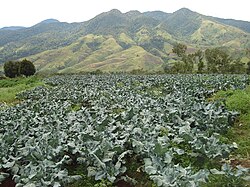
Though Sultan Kudarat hosts seventy percent of the agro-industries of the Province of Shariff Kabunsuan, its main economy is derived from the agriculture sector.
The municipality of Sultan Kudarat hosts Lamsan, one of the largest corn products manufacturers in the Philippines. The company provides employment to hundreds of workers in the municipality and nearby towns of Maguindanao del Norte.
The Gross Domestic Product of the Municipality (2022) is 23,646,300,000(PHP).
Farming
The municipality has 23,152.263 hectares of agricultural lands. While based on the year 2005 MAO's report, only 10,035 hectares of which or forty percent (49%) have been productively used, reflecting a yield of 121.4, 13,282 and 7,820 metric tons for copra, rice and corn respectively, earning a gross income of P169,279,300.00 for the year 2005. Its High Value Commercial crops have so far covered 273 hectares and shared a total yield of 536 metric tons that earned P9, 357,000.00.
YEAR 2010 CROP PRODUCTION
CROPS PLANTED AREA PLANTED IN HA.
Ave. / Yield, crop, ha (in Metric Tons) / Remarks
Rice / 12,000 / 3.5 / Mostly upland rice
Corn / 10,000 / 2.5
Coconut intercropped with corn and other crops / 12,000 / 2 (for coconut) 2,5 (for other crops)
Mango / 2,000 / 3
Banana / 5,000 / 5
TOTAL: 41,000 18.2
Fishing
The town possesses vast fishing grounds, the Maguindanao and Matampay Rivers, Illana Bay, lakes and its 1,393.4 hectares fishpond have been the major source of fish that supplies the fish requirements of the municipality and its neighboring towns. However, development programs have to be introduced to fully develop its potentials. The fish production reported is only 167,300 kilograms for the year 2005 which is not enough to supply the municipality's fish requirement of 3.9 million kilograms.
Livestock and poultry
In 2005, the Municipality of Sultan Kudarat has a total livestock population of 10,997 heads. The livestock species that are popularly raised in the municipality are carabao, cattle, and goat, probably because the town is thickly populated by the Islam believers. Its poultry population have totaled to 24,693 heads. The present livestock and poultry production of the municipality is not sufficient to supply the meat requirements of the municipality for it can only provide a total of 234,691 kilograms for the year 2005 which is very far behind the town's food requirements of about 3.7 million kilograms.
Livestock Production:
Livestock / Number of Heads / Percent to Total
Carabao / 3,120 / 17.4
Cattle / 4,387 / 24.4
Goat / 8,775 / 48.9
Swine / 960 / 5.3
Sheep / 136 / .75
Horse / 53 / .29
Others / 500 / 2.7
T O T A L: 17,931 100%
Poultry Production:
Livestock / Number of Heads / Percent (%) to Total
Chicken / 31,287 / 36.1
Ducks / 38,732 / 44.7
Turkeys / 6,751 / 7.79
Geese / 9,873 / 11.39
T O T A L: 86,643 100.00%
Source: DAF-ARMM, Sultan Kudarat, Maguindanao
Social services
Education and literacy
About 79.2 percent of the municipality's school age population are literate, that is able to read and write, based on the 1995 census. The data likewise shows that 43% are in elementary level and 26% are in high school level. College undergraduate shared with 5.4%, and 2.4% are college graduate.
Health
There is one government hospital in the town, the Cotabato Sanitarium, but it caters only to specific health needs. There are about 26 Barangay Health Centers and 10 health personnel, composed of 1 medical doctor, 1 dental doctor, 6 midwives, 1 nurse and 1 sanitary inspector, serving the 39 barangays of the municipality. The health personnel are being augmented by 8 health workers and 39 trained hilots.
以上摘自英文维基百科「Sultan Kudarat, Maguindanao del Norte」(有删节;去掉了表格、图片、参考文献和外部链接),按 CC BY-SA 4.0 使用。全文和最新版本请看原文。