舆图
阿里卡 城镇
Iriga City · 比科尔
- 国家 / 地区
- 菲律宾
- 一级行政区
- 比科尔
- 坐标
- 北纬 13.43°,东经 123.41°

示意图,边界据 Natural Earth,不作为划界依据。
更多资料
- 人口(Wikidata)
- 115,306(2024 年)
- 面积
- 137.3 平方千米
- 海拔(Wikidata)
- 129 米
- 所属行政区
- 南甘马粦省
- 邮政编码
- 4431
- 电话区号
- 54
- 邻接
- Ocampo、Buhi、Polangui
人口变化
| 年份 | 人口 | 较上一次 | |
|---|---|---|---|
| 1903 | 19,297 | ||
| 1918 | 24,145 | +25.1% | |
| 1939 | 31,005 | +28.4% | |
| 1948 | 42,049 | +35.6% | |
| 1960 | 75,439 | +79.4% | |
| 1970 | 77,382 | +2.6% | |
| 1975 | 75,885 | -1.9% | |
| 1980 | 66,113 | -12.9% | |
| 1990 | 74,269 | +12.3% | |
| 1995 | 82,482 | +11.1% | |
| 2000 | 88,893 | +7.8% | |
| 2007 | 97,983 | +10.2% | |
| 2010 | 105,919 | +8.1% | |
| 2015 | 111,757 | +5.5% | |
| 2020 | 114,457 | +2.4% | |
| 2024 | 115,306 | +0.7% |
Wikidata 记录的历次人口数(普查和估计混在一起,口径可能不同)。
百科(英文)
这个词条没有中文维基百科条目,下面是英文维基百科的原文。
Iriga, officially the City of Iriga (Rinconada Bikol: Syudad ka Iriga; Central Bikol: Syudad nin Iriga; Filipino: Lungsod ng Iriga), is a component city in the province of Camarines Sur, Philippines. According to the 2024 census, it has a population of 115,306 people.
History
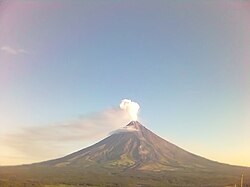
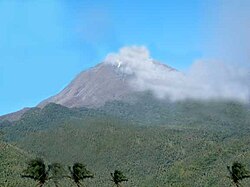
Barely half a century after Ferdinand Magellan set foot in the Philippines on March 16, 1521, Iriga, now a city, was only a visita of Nabua, Provincia de Ambos Camarines. Because of the disastrous floods that occur during rainy seasons in suburban Poblacion of Nabua, Father Felix de Huertas, the then parish priest, advised the farmers to move to I-raga (donde hay tierra or where there is land) where they can plant their crops without fear of being under flooded. The flood victims of Nabua who moved earlier and followed the suggestions of their parish priest were the fortunate beneficiaries of the harvest of their agricultural plantation coming from the rich and fertile soils of I-raga, more so, those who planted at the foot of Sumagang Mountain (Mountain of the Rising Sun, now Mt. Iriga) said to be nature's given symbol of the Irigueños lofty ideals and noble visions.
As population spread out and evangelization progressed, the settlement at the foot of Sumagang Mountain developed in size and wealth, slowly pushing the Indigenous Agta communities up to the thickness of the forest. And in 1578 the I-raga settlement was established as "visita" of Nabua under Fray Pablo de Jesus and Fray Bartolome Ruiz, both Franciscans. Three decades later or on January 4, 1641, Mount Asog (named after an Indigenous Negrito chieftain) or Mt. Iriga, erupted.
Cityhood
Through the support and cooperation of the town's people, Mayor Jose C. Villanueva successfully gained the conversion of Iriga into the signing of R.A 5261 otherwise known as the Charter of Iriga City on July 8, 1968.
Geography
Iriga is bounded by the town of Buhi in the east, by the municipalities of Baao, Nabua and Bato in the west, by the province of Albay in the south, and by the municipalities of Ocampo and Sangay in the north.
Barangays
Iriga City is politically subdivided into 36 barangays. Each barangay consists of puroks and some have sitios.
Demographics
In the 2024 census, the population of Iriga, was 115,306 people, with a density of 840 inhabitants per square kilometre or 2,200 inhabitants per square mile.
Language
Rinconada Bikol is the primary language of the vast majority of the population. People with Austronesian ancestry speak the Iriga variant of the language while the aboriginal Agta or Negritos use the Agta variant. Both variants are part of the Sinabukid dialect of Rinconada Bikol. Filipino or Tagalog and English are also understood and spoken because they are taught in the education system. Bikol Central is also commonly understood as it is used by the Catholic church and the local TV and radio stations. However, Tagalog is now becoming the primary language by the younger generations, and it is also commonly heard spoken by the members of the Iglesia Ni Cristo for it is the language used in their worship services. Some older residents have some capacity to speak and understand Spanish as it was a compulsory subject in Philippine schools until 1987.
Religion
The majority of the city residents are Roman Catholic. The Archdiocese of Caceres has several parishes and churches in the city. The biggest church is the Saint Anthony of Padua Parish Church (Iriga Church) found in the city proper area, while the Lourdes grotto symbolizes the long history of Catholicism in Iriga. Tinagba, a harvest festival, can be seen a fusion of folk tradition and Catholic saint celebration.
Economy
Poverty incidence of Iriga (%)
Source: Philippine Statistics Authority
Iriga is the 4th largest economy in the entire Bicol region, and may soon become a major economic hub in the future.
The Iriga City Public Market is one of the busiest in the region and serves as a major center of commerce in the Rinconada district. The original market was redesigned and reconstructed in 2010, and now accommodates an LCC supermarket, numerous local shops, and several national chain restaurants. The market offers a wide variety of locally produced goods, including organic produce and freshwater fish such as tilapia sourced from nearby Lake Buhi and Lake Bato. It also features an abundance of fresh and dried saltwater fish from the neighboring coastal town of Balatan. In addition, gift shops sell locally made products crafted from hemp, pili nuts, bamboo, and coconut, catering to both local and visiting tourists.
The city is home to three major commercial complexes namely the LCC Mall Iriga, which was the second LCC Mall in the district, the UNP Town Mall near the University of Northeastern Philippines, Regent Central Commercial Complex and the newly built Gaisano Capital Iriga. A new convention center was built in front of the Catholic Grotto hosts important events in the city.
Shopping malls
There are two shopping malls in the City of Iriga. LCC Mall Iriga, which is the largest commercial shopping center in the entire Rinconada area, and Gaisano mall, which is the 2nd largest after LCC Mall and possesses many fast food chains.
Tourism
Found at the downtown Iriga is the City Park which is located near the cathedral and across the old City Hall. It is a well landscaped, Japanese-themed park with a huge spurting fountain at the center but was later replaced with a skating rink. Acacia trees are lit with colored lights during Christmas season. Surrounding the park are business establishments and landmarks such as the Lourdes Grotto which offers a great view of the downtown.
There is a number of waterfalls and springs found in the city. Several resorts and hotels were built to accommodate growing tourist arrivals. The old Ibalon Hotel was renovated and renamed as Iriga City Plaza Hotel. Local cuisine offering meat and vegetarian dishes with coconut milk and red chili peppers.
Infrastructure
Railways
Railway services commenced in 1914 as part of the Legazpi Division from Tabaco to Iriga via Legazpi. It was integrated into the Main Line South in 1938. Nora Aunor was known to have been selling cold water and peanuts at the station during her youth, before her rise to stardom.
Iriga, along with other major cities from Tutuban to Legazpi, were served by the Bicol Express, before the service ended in 2006.
Today, railway services are operated by the Philippine National Railways from the Iriga station in Brgy. San Francisco on the Naga–Legazpi route, which was reopened in early 2025.
Road transport
Iriga is connected to neighbouring towns Nabua and Baao and the Maharlika Highway via the Iriga-Nabua Road and the Iriga-Baao Road.
Iriga's total road network is 366.88 kilometers (227.97 mi) in length, of which 127.97 kilometers (79.52 mi) are paved with concrete, 9.96 kilometers (6.19 mi) with asphalt, with 228.95 kilometers (142.26 mi) being out of gravel. There are also 23 bridges in the city, with the Barit Bridge, built in 1914, being declared a National Cultural Treasure in 2015.
Public transport
A small central bus terminal was constructed in the city center to accommodate buses, shuttles and jeepneys going to Manila and neighboring towns and cities. Bus companies which serve this terminal include Philtranco, DLTBCo, Alps The Bus Inc., and many others. Tickets can be bought at the terminal, or on the bus, and paid as such.
Healthcare
Three hospitals operate in the city. The Catholic-convent run Santa Maria Josefa Hospital is well equipped and among the best in the region.
Education
Iriga City is an educational hub as it hosts several universities and colleges that attracts student migrants from the local Rinconada area and even students from nearby Albay province. Aside from higher level institutions, there are multiple primary and secondary public schools that are scattered across the city to serve the youth.
Government
List of former chief executives
Capitan municipal
Don Felipe Monponbanua
(1898-1899)
Presidente municipal
Don Felipe Monponbanua
(1899-1900)
Don Eulogio Mirando
(1923-1928)
Don Santiago Gonzales
(1929-1937)
Municipal mayors
Felix Alfelor, Sr.
(1938-1940)
Don Felix Monte
(1948-1951)
Don Santiago Ortega, Sr.
(1952-1955)
Perfecto Taduran
(1956-1959)
Jose C. Villanueva
(1960-1967)
City mayors
Jose C. Vilanueva
(1968-1980; 1988-1995)
Politico R. Corporal
(OIC - 1980-1986)
Salvador de Lima
(OIC - 1986-1987)
Regino A. Revina
(OIC - 1987-1988)
Emmanuel R. Alfelor
(1995-2004)
Madelaine Y. Alfelor
(2004-2013; 2016-2022)
Ronald Felix Y. Alfelor
(2013-2016)
Rex C. Oliva
(2022–present)
Notable people
Eddie Ilarde, former Senator
Leila de Lima, former Senator
Lilia de Lima, aunt of Leila de Lima a Ramon Magsaysay Awardee.
Jaime Fabregas, actor, singer, and musical director.
Nora Aunor, actress and singer
Mila Ocampo, actress and singer
Snooky Serna, actress, daughter of Mila Ocampo.
Ronnie Ricketts, actor
Lou Bonnevie, singer
Betty Mendez Livioco, talkshow host.
Lianne Valentin, actress and television presenter
Genaro Saavedra, athlete
Juan Taduran, athlete
以上摘自英文维基百科「Iriga」(有删节;去掉了表格、图片、参考文献和外部链接),按 CC BY-SA 4.0 使用。全文和最新版本请看原文。